

How To Renovate A Chateau Anna And Phillip

A couple of weeks ago I talked about future blogposts and how I wanted to feature people who had renovated onetime French houses. I thought we would boot off with a bang and cover the renovation of an ancient château as a niggling entrée. How ancient? Well, the earliest reference to this fortified edifice is some 300 years before Columbus set sail with his trivial fleet for the western Atlantic, and when the showtime stones were laid for the château's walls, William the Conqueror (he who smote Harold with an arrow at the 1066 boxing of Hastings) had but only died. It all began in that period of history when people yet kept animals in the downstairs room of their houses, lived in fear of the devil at night, and all along the coastline of Europe, men stowed their swords and pikes ready to defy intrusions from the ocean. It'south all a long, long time ago.
I have been fortunate enough to meet and spend some fourth dimension with André Rousselot, who is the current owner of the Château Fort de St Jean d'Angle. The son of a businessman from La Rochelle, André exudes excitement, passion and confidence. A man as at domicile behind the boardroom tabular array every bit he is at the helm of a cement-mixer, André typifies the endurance of the sort of person needed to see through and complete a project of some 22 years standing. Although nonetheless unfinished, the château is very much alive and well now; a far cry from when his father bought it in 1994. Then, it was a ruin; a mound with a clump of trees and rock walls, surrounded by a brackish moat. Today it has been most totally restored and transforms during summer into a magical re-enactment of medieval times, consummate with sentries on its battlements, a moat which 1 crosses at your own peril, battles and jousts on summer days between sweating men in total armor on oxen-sized horses, and a swathe of authentic games and interests for people to relish. It is besides truthful to its owners' vision though, and gives brusque thrift to the glamour of any Disney makeover. Existent artisans make pots, beat out sword blades on red hot forges and stitch saddles and boots equally you watch; the only fast-food in sight is a suckling pig on a spit attended to by a pitchfork-bearing man in leather jerkin blackened by smoke.


Last time Roddy and I visited André it was a cold and wet winter's twenty-four hour period, but there was a huge welcoming log-fire burning in the Smashing Room, and over a loving cup of tea he brought us up to engagement with his plans, and explained why the building was now such an important role of his family's life.

Outset, though, the boring bit – some history. This is important because we're talking well-nigh a château fort every bit opposed to a château, and as a result I need to explicate the deviation between the two. A château, is a large country house, or a manor firm, or sometimes fifty-fifty a castle – with or without fortifications. A château fort on the other paw, is ever a castle with fortifications!

It isn't until you are really in the château, looking out across the marais from its windows that one begins to truly empathise the importance and significance of the edifice. Being and so shut to the original coastline, Rochefort and its islands and marshlands had their fair share of invaders from the body of water – whether they were Vikings, Berber pirates, Anglo-Saxons, Danes or even Celts; past the 12th century all three of the expanse's dandy inland trophy were being transformed into areas of marshland, where developing agriculture, aquaculture and the booming table salt trade provided rich pickings during occasional incursions past thieves from the body of water. As the trophy changed from shallow littoral waters into the swell marais which are still used today, the ridge-tops provided a sound defensive position for the developing marshes. Perfectly placed on the skyline just in a higher place the marais, a fortified castle could deed equally both a deterrent and every bit a refuge for those working on the water and in the fields almost information technology. This is how and why the château fort was built-in – to defend some 6000 acres of considerably wealthy revenue. André took us upward to the battlements to demonstrate the significance of the position. I mentioned to André that the English had probably paced the same ramparts. "Absolutely," he replied laughing. "The aforementioned family may have owned the château all that time, but sometimes they were under French dominion, and sometimes nether English."

The château fort is believed to have been originally built around 1180 by Guillaume de Lusignan, who was from 1 of the most powerful families in the region. It remained in the possession of different parts of that family through most of the succeeding centuries. However, by the beginning of the 20th century, it was in ruins, and the land was used equally common grazing ground by villagers. Two world wars afterwards, we come to 1994 and André'due south father, Alain; driving through the area regularly on business organization, he became enchanted with the ruins and the thought of restoring the battered sometime building, whose walls were literally held up by the vegetation that had grown up amongst them. In December of that twelvemonth, he finally bought information technology.
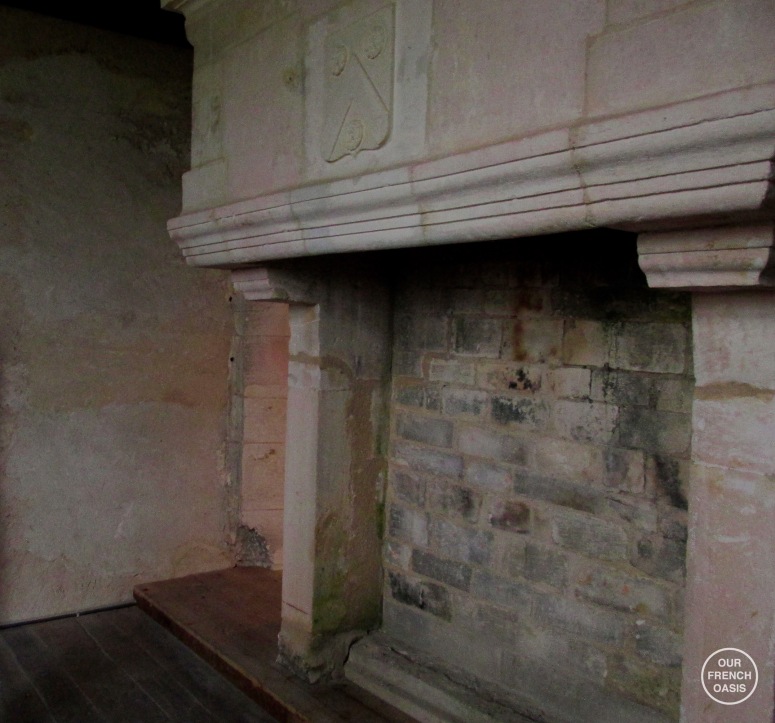
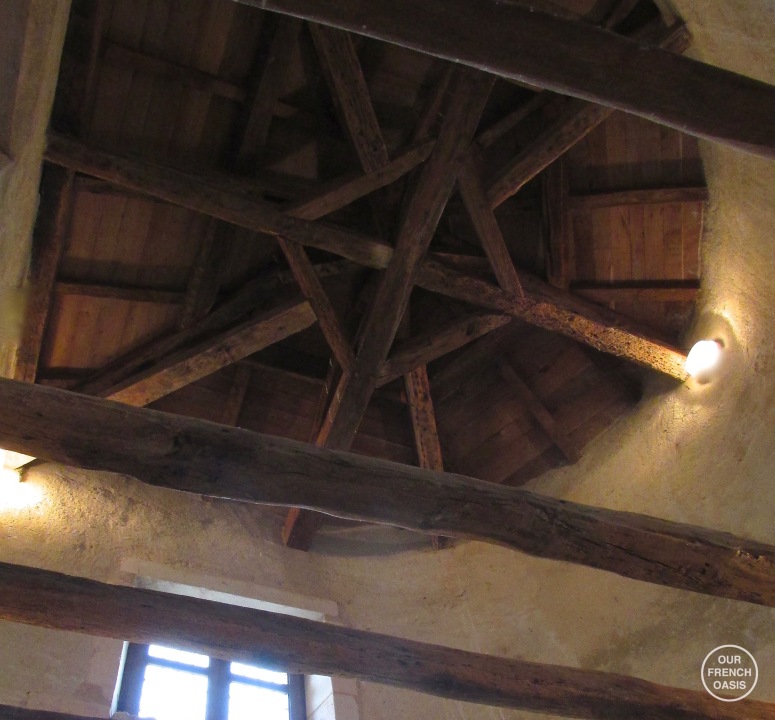
But who would take on such a projection and why? Information technology had taken Alain, André and other members of the family some 22 years before they were able to officially open up the château to visitors. Information technology all began with six initial years of work in January 1995, in collaboration with the Monuments of French republic. Helped in small function by some grants, most of the restoration has been funded by Alain's own coin and as a result there were periods when picayune got done, when cash was tight. The château lived for many years enveloped in a nest of scaffolding as the walls were almost totally rebuilt, to rectify massive settlement fissures that had adult over the centuries. Much of this piece of work was done by the highly skilled artisans from the Monuments' own taskforce, and such was the quality of the work that in 2003, the chateau received ii prestigious awards; the Grand Prix of the French houses and the Prix Europa Rostra. Looking around the great room, I could see the new huge beams to a higher place my head, and the fresh sandstone pieces in the fireplace and walls. Succeeding bouts of restoration have included new roofs on the Great Hall and its adjacent buildings, excavations of the cellars and dungeons, new floors throughout all the buildings, and a crash class for many in the art of cutting stone; shaping some of information technology into intricate pieces and shapes, and using traditional and tested techniques for specific architectural contexts, such equally mullions for windows, interior archways and outside staircases.


André was smashing to show us the progress they had made in the upstairs rooms and nosotros followed him through an interior doorway to a screened staircase. Along the fashion nosotros passed a tableau of mannikins in full costume enacting a typical kitchen scene, and gingerly stepped over a recumbent soldier asleep on some hay in a bastille. As we went upward the curved spiral stone stairs, he kept pointing out the features that were original and those that has been restored. Upward on the 2nd floor above the Dandy Hall, newly restored floorboards accept replaced the hundreds of forest-worm riddled planks. Old windows take been unblocked, and all of the château's fenestration has received new mullions and new glass, a project all to itself.


Ancient fireplaces have been carefully restored, one-half-finished electric wiring and copper plumbing artifacts weaved here and in that location, testament to the ongoing work and hinting at the plans afoot for the hereafter. André paced from wall to wall, telling us well-nigh imaginary bathrooms and spaces for beds, equally he outlined his plans for 6 en-suite bedrooms and weekends for enterprising visitors. He had visions of grand banquets and ideas came pouring forth in conversation; I was amazed at the free energy of someone who had spent 20 years looking at what must have appeared at some stages to be a complete mad loss.
Information technology was this final understanding of André and his family's commitment that finally got to me. It is one thing to pass by the colourful medieval pageant that the château embodies on a summer's 24-hour interval, but it is quite different to the reality of listening to someone who explains that all of the previous work is but a foreword to a much greater plan, and that the plans also include edifice a second fort on the site where an eighth century wooden structure once stood, transforming 20 acres of surrounding land into the original ordered and regimented potagers, orchards, stables, outhouses and other buildings.

However, as with whatever renovation, budget is ever a business concern and given the sheer size of this project I imagined it must exist a constant companion to André, and and then I asked the inevitable question.
"How much has it all cost over the years?"
"Who knows, who is counting? We do not. If we did we would never stop; but it must eventually pay for itself," explained André with that typical French shrug; but I definitely got the feeling that behind the coincidental respond he does indeed know exactly how much has been spent and how much more is needed.


Ane story more almost embodies the struggle André's family unit has had to endure during this amazing restoration is the tale of the Tour de Clio. Ane summer'south twenty-four hours, a decade in the past, he and his father received a telephone call from the foreman of the workforce.
"Come up chop-chop," the terrified man said, "the tower is going to fall down, it is swaying"
In a state of panic they asked what needed to be done.
"We demand coin, I can save the tower with money," said the foreman. It needed some urgency, since no one could stay on the scaffolding, just a huge 20 metre baulk of timber was needed to shore upwardly the cracked castle wall while they repaired it. A beam this large would cost a fortune, merely at that place was no spare cash bachelor for information technology. André and his father badly searched for a solution all morning and and so Alain rang his wife, and informed her that the coin they had put bated for a new Clio (at the time the newest and most sort after small-scale car built past Renault) was going to have to be used instead for a behemothic wooden prop.
"You lot mean I cannot have the car?" asked his wife incredulously.
"No, I am sorry," said Alain, sadly, "the château is more important."
Then the Tour de Clio, the tower at the dorsum of the château, was born and it has been called that to this 24-hour interval.

You tin find out more than nigh the Château from their website hither, http://chateau-stjeandangle.fr and if you are in the Charente Maritime practice take the fourth dimension for a visit. It is open leap, summertime and autumn and yous will non be disappointed.

Lou Messugo All About French republic
Source: https://ourfrenchoasis.com/2016/01/28/renovating-a-chateau/
0 Response to "How To Renovate A Chateau Anna And Phillip"
Post a Comment